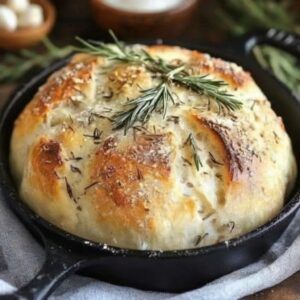
Rustic No-Knead Rosemary Garlic Bread
There is a quiet, rhythmic magic in a kitchen defined by the scent of a slow-fermenting dough and the woody aroma of fresh herbs. This Rustic No-Knead Rosemary Garlic Bread is a legendary “set-it-and-forget-it” staple, known for its shatteringly crisp, artisan-style crust and a soft, airy interior infused with the savory warmth of roasted garlic and rosemary.
This recipe is a favorite for those who believe that the best bread shouldn’t require a workout. It captures the essence of a traditional Mediterranean bakery—offering a dense, satisfying texture and a nostalgic, herbal aroma—providing a reliable, melt-in-your-mouth experience that is as effortless as it is delicious.
This recipe matters because it honors the beauty of the slow rise. It saves you from the labor of traditional kneading by focusing on the small, essential chemistry of time and hydration—proving that the most unforgettable loaves are often the result of beautiful simplicity.
Ingredients
-
3 cups All-purpose flour (Or bread flour for extra chew)
-
1 1/2 cups Warm water (About 100°F)
-
1 1/2 teaspoons Salt
-
1/2 teaspoon Active dry yeast
-
2 tablespoons Fresh rosemary (Finely chopped)
-
3 cloves Garlic (Minced or finely slivered)
-
(Optional: A drizzle of olive oil for the top)
Instructions
-
In a large mixing bowl, whisk together the flour, salt, yeast, and chopped rosemary until well combined.
-
Stir in the minced garlic so it is evenly distributed through the flour.
-
Pour the warm water into the dry ingredients and stir with a wooden spoon until a shaggy, sticky dough forms.
-
Cover the bowl tightly with plastic wrap and let it sit at room temperature for 12 to 18 hours (overnight is best); the dough will double in size and be covered in tiny bubbles.
-
Preheat your oven to 450°F and place a Dutch oven (with the lid) inside to heat for 30 minutes.
-
While the oven heats, turn the sticky dough onto a heavily floured surface and gently fold it into a ball; do not overwork it.
-
Place the dough onto a piece of parchment paper and let it rest while the Dutch oven finishes preheating.
-
Carefully remove the hot Dutch oven and lift the parchment paper to drop the dough inside.
-
Cover with the lid and bake for 30 minutes.
-
Remove the lid and bake for an additional 10 to 15 minutes until the crust is a deep, golden brown and sounds hollow when tapped.
-
Allow the bread to cool on a wire rack for at least 30 minutes to let the interior structure set before slicing.\
Why This Recipe Works
-
The Steam Chamber: Baking inside a preheated Dutch oven traps the moisture from the dough, creating a mini-steam room that allows the crust to expand and become incredibly crispy while the inside stays moist.
-
Auto-Kneading: High hydration (the ratio of water to flour) allows the gluten strands to align themselves naturally over several hours, eliminating the need for physical kneading.
-
Herb Infusion: The long fermentation period allows the oils from the rosemary and the pungency of the garlic to fully permeate the flour, creating a professional-grade flavor profile.
-
Minimal Yeast: Using a small amount of yeast prevents the bread from rising too quickly, ensuring a complex, slightly tangy flavor rather than an overly “yeasty” one.
Tips for Best Results
Use fresh rosemary. While dried rosemary works in a pinch, fresh rosemary has natural oils that release during the long fermentation, providing a much more legendary, aromatic experience.
Don’t skimp on the salt. Salt is vital in no-knead bread; it doesn’t just provide flavor, but it also helps control the yeast and strengthens the gluten structure for a better “spring.”
Handle with care. No-knead dough is notoriously sticky. If you need to shape it, lightly flour your hands or use a dough scraper. The goal is to keep as much of that fermented air inside the dough as possible.
Variations & Substitutions
For a “Garlic Butter” twist, brush the top of the hot loaf with a mixture of melted butter and garlic salt immediately after removing it from the oven.
If you prefer a “Savory Cheese” profile, fold in a half-cup of shredded Parmesan or sharp white cheddar during the initial mixing phase.
To make this “Whole Grain” style, substitute 1 cup of the all-purpose flour with whole wheat flour for an earthier, more rustic bite.
Frequently Asked Questions
How should I store rosemary garlic bread?
Store at room temperature in a paper bag for up to two days. For longer storage, slice the bread and freeze it in a sealed bag; it toasts up beautifully directly from the freezer, reviving the rosemary scent.
Can I use a regular baking sheet?
You can, but the crust will be softer. To get that legendary artisan crunch, you need a heavy, lidded pot like a Dutch oven to trap the steam.
Why is my bread so sticky?
No-knead dough is supposed to be very wet and sticky! This high moisture content is exactly what allows the gluten to form without kneading. Resist the urge to add too much extra flour.
Can I let it rise longer than 18 hours?
Up to 24 hours is usually fine, but beyond that, the yeast may exhaust its food supply and the dough can collapse, leading to a flatter, denser loaf.
There is a simple, savory joy in a meal that starts with a warm, herbal loaf. Rustic No-Knead Rosemary Garlic Bread is a reminder that the most legendary flavors are often the ones that take the most time. We hope this golden, aromatic artisan loaf becomes a favorite highlight of your kitchen adventures.