Great Grandma Keka’s Legacy Fry Bread: Authentic Native Recipe
Great Grandma Keka’s Legacy Fry Bread: A Testament to Survival
There is a profound, resilient history in a piece of bread that transforms simple commodity rations—flour, salt, and lard—into a symbol of survival and enduring family love. This fry bread recipe, passed down from Great Grandma Keka of the Jicarilla Apache Nation, is more than just a culinary staple; it is a testament to the strength of a people forced off their land and onto reservations, where they utilized the unfamiliar “commodity foods” provided by the government to keep their families fed.
This recipe is a cherished heirloom. It tells the story of Keka—”Big Grandma,” who stood at 5′ tall but cast a long shadow of resilience—who left the Rez to build a life on a farm in Aguilar, Colorado, with her husband, Grandpo Tafoya. It honors the lineage of Little Grandma, Keka’s daughter, who carried the tradition forward. While we recognize that fry bread was born out of the necessity of starvation and the trauma of colonization, it has evolved into a symbol of the Native American experience—a tradition that is deeply tasty, inherently historical, and a reminder of where our families have been.
This recipe matters because it preserves the history of our ancestors. It proves that even in the face of immense hardship, family recipes are the threads that hold our identity and our memories together.
Ingredients
-
4 cups All-purpose flour (The cornerstone of the commodity era)
-
2 tablespoons Baking powder (The secret to that signature airy lift)
-
1 teaspoon Salt
-
1 1/2 cups Warm water (Adjust for a soft, pliable dough)
-
Oil or lard (For frying—traditionally lard, now commonly vegetable oil)
Instructions
-
In a large bowl, whisk together the flour, baking powder, and salt.
-
Gradually add the warm water, mixing until a soft, slightly sticky dough forms. This is the secret to a professional-grade, elastic texture.
-
The “Resting” Secret: Cover the dough and let it rest for at least 30 minutes. Allowing the gluten to relax is the secret to getting that perfect, easy stretch without the dough snapping back.
-
Heat about an inch of oil or lard in a heavy-bottomed skillet until it reaches 350°F.
-
Pinch off a golf-ball-sized piece of dough. Using your hands, gently stretch it into a flat, thin disc. You want it to be thin toward the center and slightly thicker at the edges.
-
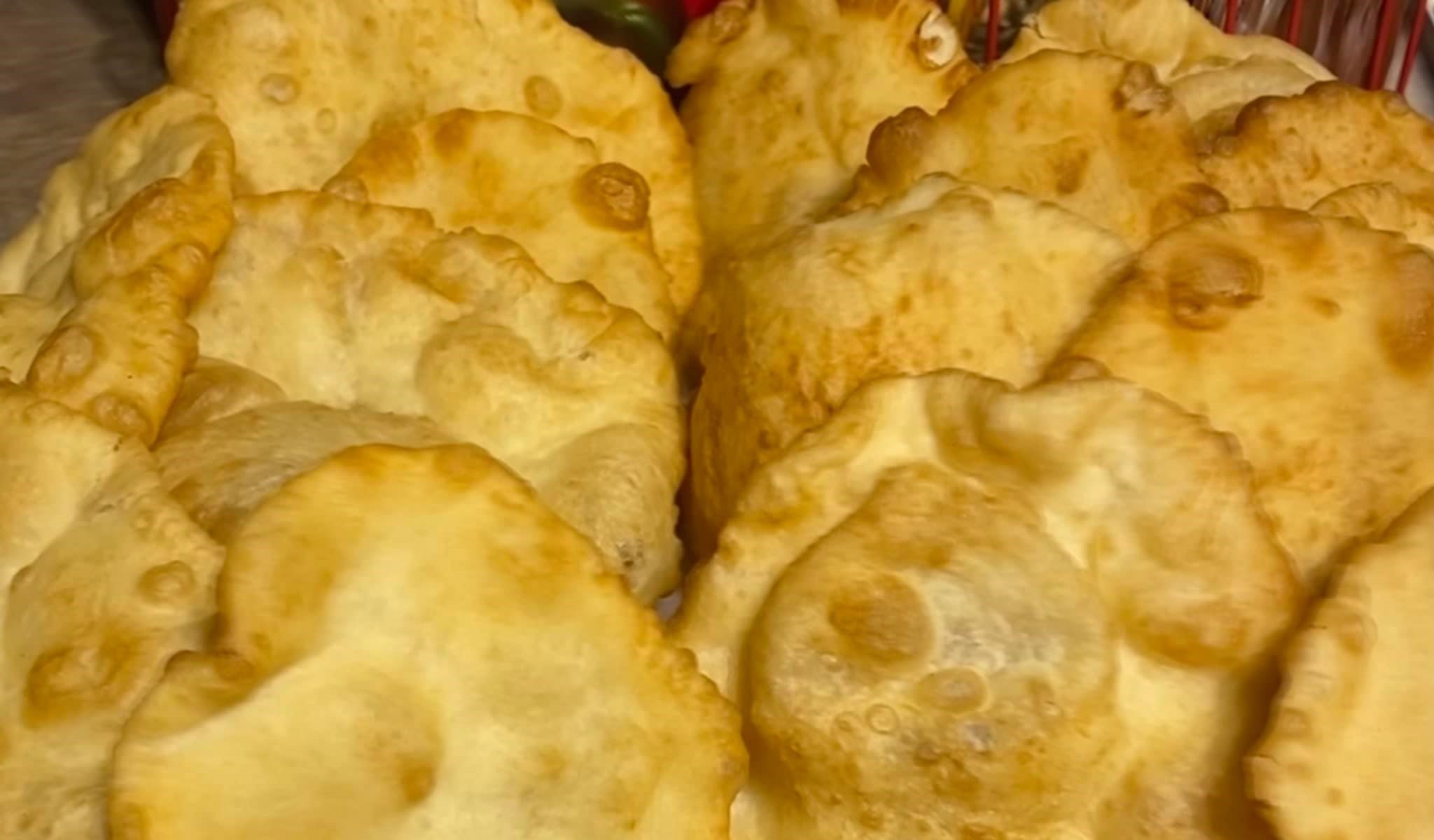
The “Fry” Secret: Carefully drop the dough into the hot oil. It will puff up legendary-ly, creating that classic bubbly, crisp surface.
-
Fry for 1 to 2 minutes per side until golden brown and firm.
-
Remove and drain on paper towels to remove excess oil.
-
Serve warm. Whether you top it with honey, powdered sugar, or use it as a base for an “Indian Taco,” this is the heart of the Native American culinary experience.
-
Enjoy with gratitude for the hands that made this before us.
Why This Recipe Works
-
Baking Powder-Steam Synergy: The baking powder reacts with the heat of the oil to create instant pockets of steam within the dough, resulting in that iconic, airy, “pillowy” interior that contrasts with the crispy exterior.
-
Commodity-Fat Stabilization: Using lard or oil at the correct temperature provides a clean, fast fry that seals the dough, preventing it from becoming overly greasy while ensuring a golden, crisp finish.
-
Gluten-Relaxation Precision: The 30-minute rest is essential; it ensures the dough is pliable enough to stretch thin without tearing, which is the secret to getting the authentic shape Keka would have known.
-
Legacy-Retention: Following these traditional proportions ensures the bread tastes like the history it represents—a simple, filling food that served as a lifeline during difficult times.
Tips for Best Results
Don’t overwork the dough. For a truly legendary, professional-grade result, handle the dough gently. Over-kneading will result in tough, rubbery bread rather than the light, airy texture that defines great fry bread.
Maintain the Oil Temperature. Most home enthusiasts let the oil get too cool. Keep your heat steady; if the oil is too cool, the bread will drink the oil and become heavy. If it’s too hot, it will burn before cooking through.
The “Stretch” Technique. Don’t use a rolling pin. Stretching the dough by hand using your fingertips is the secret to maintaining the unique texture and the varied thickness that allows for those signature bubbles.
Frequently Asked Questions
How should I store fry bread?
Fry bread is legendary when eaten fresh. However, you can store leftovers in an airtight container for a day and reheat them in a dry skillet or oven to restore the crispness.
Can I use gluten-free flour?
While you can try, the structure of traditional fry bread relies on the gluten in wheat flour to hold that airy, bubbly shape. Gluten-free versions will likely be denser and less pliable.
Why is my fry bread tough?
This usually happens if the dough was mixed too much or if it didn’t rest long enough. Patience is the secret to that professional-grade, tender, “pull-apart” quality.
What is the best way to eat it?
It is legendary both ways: sweet (drizzled with honey or jam) or savory (topped with ground beef, beans, lettuce, and cheese as a base for tacos).
There is a profound joy in a recipe that connects you directly to the farm in Aguilar and the Rez in New Mexico. Great Grandma Keka’s Legacy Fry Bread is a reminder that our traditions are the most powerful things we own. We hope this golden, crispy classic remains a cornerstone of your family gatherings for generations to come.